

Conspiracy theories weave through the fabric of human consciousness like dark threads in an ancient tapestry, each strand a story that challenges our understanding of reality. In the liminal space between known and unknown, these narrative patterns emerge like shadows at twilight, compelling us to question the very nature of truth itself.
The Dance of Doubt: Famous Conspiracy Theories Through Time’s Lens
Like stars scattered across the night sky, certain conspiracy theories shine brighter than others in our cultural constellation. The moon landing conspiracy floats in our collective imagination like a paper lantern, its light casting curious shadows across half a century of human achievement. In the vacuum between what we think we know and what we fear might be true, questions spiral like cosmic dust: Did human footprints really grace the lunar surface, or were they merely impressions in a desert studio, orchestrated for countless watching eyes?
The flat Earth theory persists like a stubborn echo in our digital age, a testament to humanity’s eternal struggle between observable reality and desired belief. Its adherents stand at the edge of their perceived world like ancient mariners, peering into an abyss that modern science says cannot exist. Yet in their steadfast conviction, we glimpse something profound about human nature – our desperate need to make sense of our place in the cosmos, even if that meaning comes wrapped in impossible geometries.
Chemtrails paint white lines across azure skies, transforming the canvas of our atmosphere into a cosmic Rorschach test. Each contrail becomes a question mark suspended in the heavens, asking us to consider the fine line between environmental concern and paranoid speculation.
Shadows in the Corridors of Power: Government Secrets Unveiled
Like water wearing away stone, time has revealed certain truths that once seemed mere paranoid fantasies. MK-Ultra emerges from declassified documents like a nightmare given form, proving that sometimes the darkest conspiracy theories cast shadows because there are real objects blocking the light of truth.
Military projects buried in black budgets bloom like midnight flowers, their existence acknowledged only in whispered corridors and redacted documents. Each revelation serves as a reminder: in the space between what governments admit and what they do, conspiracy theories find fertile soil for growth.
Stellar Whispers: The Alien Conspiracy Theories
Roswell stands as a lighthouse in the vast ocean of UFO lore, its beacon cutting through decades of official denials and counter-narratives. The incident pulses in our cultural memory like a distant radio signal, neither fully decoded nor completely dismissed. Desert nights still hold secrets, and in the vast silence of New Mexico skies, possibilities stretch endless as the stars themselves.
The Disclosure Project gathers testimonies like precious stones, each account a facet reflecting something that might be truth, might be delusion, might be both. Military pilots chart impossible objects across their instruments, while government officials speak in measured tones about “unexplained aerial phenomena.” In this confluence of official acknowledgment and continued mystery, new theories spiral like galaxies being born.

Time’s Dark Mirrors: Historical Events Reconsidered
The assassination of JFK cracks across American history like lightning, its thunder still rolling through decades of speculation and analysis. Each theory branches like neural pathways through our collective consciousness: the grassy knoll, the magic bullet, the shadowy figures at the edges of every photograph. In the space between what we know and what we suspect, conspiracy theories bloom like flowers in nuclear winter.
The events of 9/11 stand like obsidian monoliths in our shared timeline, their surfaces reflecting different truths depending on where one stands to look. Engineers debate physics while witnesses recall explosions, and in the debris of that terrible day, theories multiply like cells dividing, each carrying a fragment of possibility within its nucleus.
The Corporate Labyrinth: Modern Mysteries of Power and Profit
Big Pharma looms in our medical narratives like a sophisticated dragon, hoarding not gold but patents, treatments, and possibilities. In its shadow, conspiracy theories grow like resistant strains of bacteria, feeding on the genuine questions about profit versus public health, corporate ethics versus human needs.
The Illuminati and other secret societies flutter through history like dark butterflies, leaving traces of their supposed influence in architecture, currency design, and global events. Their very absence from official records becomes, to some, the strongest evidence of their existence – as if power’s greatest trick was convincing the world it had no hidden hand.
The Digital Conspiracy Theories: Modern Manipulation and Mass Control
Social media platforms become vast petri dishes where conspiracy theories evolve at lightning speed, mutating and combining like digital DNA. Each share, each like, each comment adds to the complex ecosystem of belief and doubt, truth and fiction. In this new landscape, the line between investigation and obsession blurs like city lights in fog.
Tech giants harvest our data like modern-day alchemists, transforming our digital footprints into gold. In their algorithmic shadows, theories about mass surveillance and mind control find purchase like vines growing up ancient walls. Each privacy breach, each targeted ad, each eerily precise recommendation feeds the growing suspicion that we are not users but used.
The Psychology of Belief: Why Conspiracy Theories Resonate
Like moths to flame, human minds are drawn to patterns, even in chaos. Conspiracy theories offer a framework for understanding an increasingly complex world, providing narrative structure to random events and satisfying our deep need for meaning. They whisper that nothing is accident, everything is connected, and somewhere, someone knows the truth.
In times of uncertainty, these theories spread like wildfire through dry brush, offering simple explanations for complex problems and identifiable villains for faceless fears. They transform anxiety into agency, helplessness into knowledge, isolation into community.
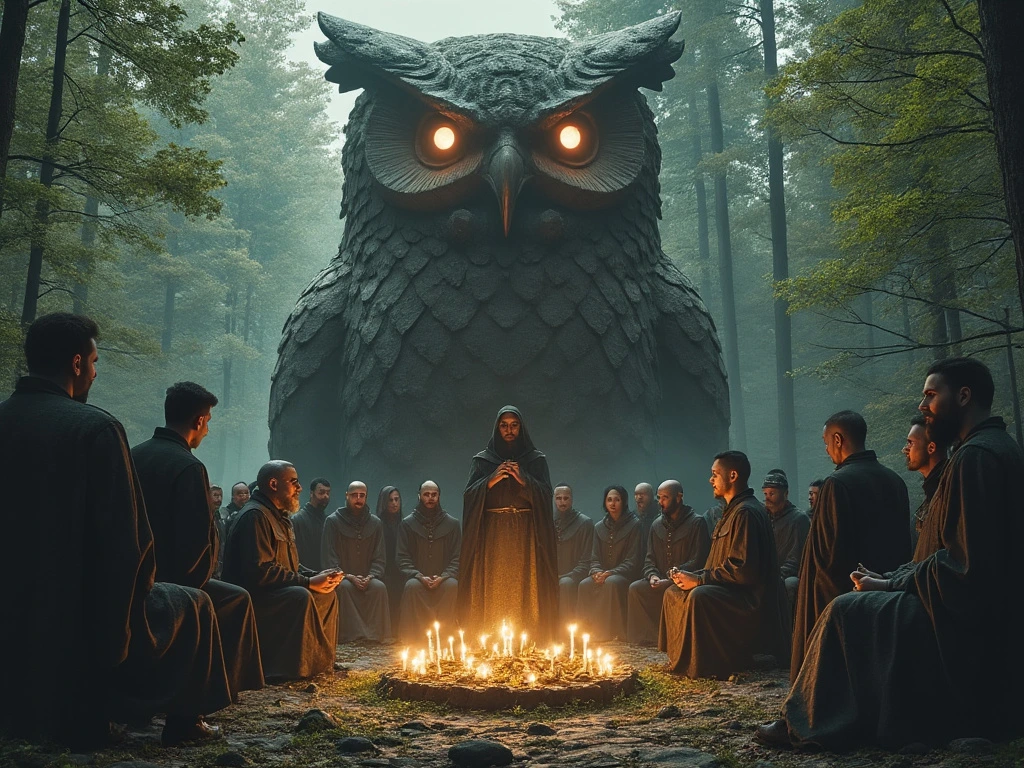
The Price of Certainty: When Theories Become Reality
Yet in this garden of alternative explanations, some flowers are poisonous. Conspiracy theories can lead believers down paths dark as moonless nights, where skepticism of authority transforms into rejection of essential truths. Vaccines become villains, science becomes suspect, and the very institutions designed to protect society face erosion like cliffs before a rising sea.
Navigating the Labyrinth: Finding Truth in the Age of Information
How then do we walk the line between healthy skepticism and harmful paranoia? Like ancient navigators, we must learn to read the stars of fact while acknowledging the vast dark spaces between them. Critical thinking becomes our compass, leading us through waters where sirens of certainty sing their dangerous songs.
The truth about conspiracy theories may be as complex as the theories themselves: they serve as both warning and distraction, both symptom and disease. In their totality, they paint a portrait of human nature – our fears, our hopes, our desperate need to understand the incomprehensible.
Conclusion: The Eternal Dance of Knowledge and Mystery
As we stand at the crossroads of information and misinformation, watching conspiracy theories bloom like aurora borealis across our cultural sky, perhaps our task is not to dismiss them entirely nor to embrace them wholesale. Instead, like scientists studying strange phenomena, we might observe them with curious minds and careful methods, understanding that in their twisted paths may lie important questions about power, truth, and human nature.
For in the end, conspiracy theories remind us of an essential truth: reality itself is often stranger than any fiction we might weave. The universe holds mysteries deeper than our deepest theories, and sometimes the most profound conspiracy might be our own resistance to accepting how little we truly know.
In this dance between knowledge and mystery, between fact and fiction, between the seen and unseen, we find ourselves forever searching for truth’s reflection in the mirror of possibility. And perhaps that search itself, that eternal questioning, is as important as any answers we might find.